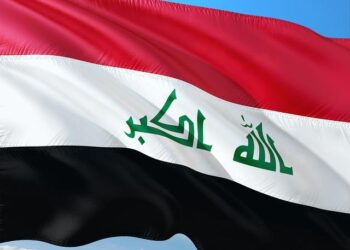
Iraq finds itself ensnared in a complex web of competing authorities amid escalating regional tensions, where sovereignty exists in name but not in full control. As the country grapples with a dual power crisis, rival factions and external actors exert influence over critical state functions, undermining Baghdad’s ability to assert unified governance. The Gulf International Forum’s latest analysis delves into how this fractured authority complicates Iraq’s position in a broader regional conflict, raising questions about the future of its stability and autonomy.
Iraq’s Struggle with Sovereignty Amid Competing Regional Influences
Iraq finds itself at a critical crossroads, where its sovereign authority is persistently challenged by the overt and covert maneuvers of regional powers seeking to extend their influence. The country’s internal governance is frequently undermined by factions aligned with external actors, leading to a complex web of competing loyalties. This fragmentation significantly impairs Baghdad’s ability to assert unified control over its territories and resources. Key urban centers and border regions remain contested, with power brokers leveraging ethnic and sectarian divisions to solidify their strategic footholds. Such dynamics perpetuate a dual power structure that dilutes effective state governance and worsens the security vacuum.
The interplay between external pressures and internal factionalism renders Iraq’s political landscape volatile and unpredictable. Several prominent regional players exert influence through a combination of political patronage, economic investments, and military presence, creating a multilayered contest for supremacy. These influences manifest through:
- Political alliances: Support for rival political blocs within Iraq’s parliament.
- Security arrangements: Deployment and backing of militia groups with foreign ties.
- Economic dependencies: Control over critical infrastructure such as oil pipelines and ports.
The following table outlines some of the principal regional actors and their modes of engagement within Iraq:
| Country | Main Influence Channels | Regions Impacted |
|---|---|---|
| Iran | Militias, Political Parties, Economic Investments | Southeast Iraq, Baghdad |
| Saudi Arabia | Diplomatic Outreach, Economic Aid, Sectarian Alliances | Western Iraq, Anbar Province |
| Turkey | Military Operations, Kurdish Policy, Trade Routes | Northern Iraq, Kurdistan Region |
| United States | Security Assistance, Anti-ISIS Operations, Political Mediation | Central Iraq, Baghdad |
The Impact of Dual Power Structures on Iraq’s Political Stability
Iraq’s political landscape remains deeply fragmented, dominated by competing authorities that undermine the very concept of sovereignty. The coexistence of central government institutions alongside influential militias and regional power brokers has created a precarious balance where effective governance is often secondary to factional interests. This duality erodes public trust in political institutions and fuels insecurity, as various groups wield control over territory, resources, and security forces independently of Baghdad’s mandate. The result is a diffused state authority struggling to assert a cohesive national agenda amid the complex dynamics of regional rivalries and internal divisions.
The implications are profound, particularly as Iraq navigates its position in a broader Middle Eastern conflict shaped by external patronage and intervention. Key characteristics of this fragmented power structure include:
- Parallel security forces: Armed factions operate outside official command, challenging the monopoly on violence.
- Fragmented economic control: Different groups manage oil-rich provinces, leading to unequal resource distribution and corruption.
- Undermined political legitimacy: The government’s inability to enforce policy uniformly diminishes its authority in both domestic and international arenas.
| Entity | Control Area | Influence on Politics |
|---|---|---|
| Central Government | Major Cities & Federal Institutions | Legislative & Diplomatic Authority |
| Shiite Militias | Southern Provinces | Security & Local Governance |
| Kurdish Regional Government | Northern Iraq | Autonomous Governance & Security |
Recommendations for Restoring Effective Governance and Regional Balance
Revitalizing Iraq’s governance structure demands a multipronged approach that prioritizes decentralization and enhanced local authority. Empowering provincial councils while reinforcing accountability mechanisms can gradually dismantle the parallel power centers weakening the state. The federal government, supported by robust constitutional reforms, must work collaboratively with regional actors to establish transparent resource-sharing agreements, particularly concerning oil revenues. Strengthening judicial independence and reigniting civic participation are critical to restoring public trust and ensuring the enforcement of the rule of law across all contentious territories.
Internally, Iraq benefits from a cohesive political dialogue that acknowledges the diverse ethnic and sectarian identities without allowing them to fracture national unity. Practical measures include:
- Institutionalizing conflict resolution platforms at both local and national levels to preempt violence and foster dialogue.
- Reforming security forces to be representative, nonpartisan, and professionally trained to respect civilian authority.
- Expanding socio-economic development programs focused on marginalized and war-affected regions to curb grievances fueling factionalism.
| Key Focus Area | Recommended Action | Expected Outcome | ||||||||||||||||||
|---|---|---|---|---|---|---|---|---|---|---|---|---|---|---|---|---|---|---|---|---|
| Governance | Enhance provincial autonomy with constitutional backing | Balanced regional authority; reduced tensions | ||||||||||||||||||
| Security | Reorganize security forces to ensure neutrality | Stable Certainly! Here is a continuation and completion of the table along with a summary of the expected outcomes:
“`html
|