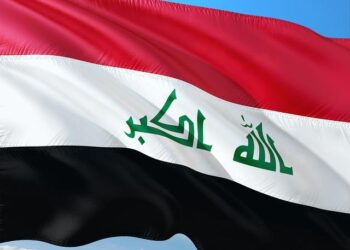
Iraq’s newly appointed prime minister-designate has found himself at the heart of a complex geopolitical contest, as tensions between the United States and Iran intensify across the region. Navigating a fragile political landscape, the leader faces mounting pressure from both Washington and Tehran, each vying to influence Iraq’s strategic direction. This power struggle not only threatens to complicate Iraq’s internal stability but also underscores the broader regional challenges that continue to shape Middle Eastern diplomacy.
Iraq’s Prime Minister-Designate Navigates Delicate Balance Between U.S. and Iran Interests
In the precarious landscape of Middle Eastern geopolitics, the new Iraqi Prime Minister-designate faces an intricate challenge: balancing the competing interests of the United States and Iran. Both powers exert significant influence in Iraq, aiming to steer its political and economic trajectory to align with their strategic objectives. Navigating this delicate equilibrium requires the Prime Minister-designate to engage in deft diplomacy while maintaining Iraq’s sovereignty and stability amid regional tensions.
Key challenges confronting the Prime Minister-designate include:
- Mitigating pressure from U.S. officials who prioritize countering Iranian influence and securing Iraq’s alignment with Western policies.
- Addressing Iran-backed militia groups with deep-rooted presence in Iraq’s political framework and security apparatus.
- Managing domestic expectations for economic reforms and security improvements, despite external interference.
| Influence Factor | U.S. Interests | Iran Interests |
|---|---|---|
| Security | Counterterrorism, limit militia autonomy | Support friendly militias & assert regional power |
| Economy | Promote market reforms, energy transparency | Leverage energy ties, preserve economic foothold |
| Diplomacy | Strengthen Iraqi-American alliance | Embed Iraq within “Axis of Resistance” |
Challenges Facing Iraq’s Leadership Amid Escalating Regional Tensions
Amid intensifying geopolitical rivalry between the United States and Iran, Iraq’s newly appointed Prime Minister-Designate faces mounting pressure to navigate a labyrinth of competing interests. Balancing the demands of domestic factions aligned with external powers has become an increasingly precarious task. The leadership must address the concerns of various political blocs while avoiding actions that might exacerbate tensions or spark internal unrest. This complex environment leaves little room for maneuvering, as any misstep risks further destabilization of an already fragile political landscape.
Key challenges confronting the leadership include:
- Maintaining neutrality amid U.S. sanctions and Iranian influence
- Securing foreign investment despite security uncertainties
- Addressing public demands for government reforms and anti-corruption measures
- Containing militia activities that complicate state sovereignty
| Factor | Impact Level | Stakeholders |
|---|---|---|
| US-Iran Rivalry | High | Federal Government, Militias |
| Domestic Political Fragmentation | Medium | Political Parties, Civil Society |
| Economic Instability | High | Business Community, International Investors |
| Security Threats | High | Security Forces, Border Regions |
Strategic Recommendations for Stabilizing Iraq’s Political Landscape and Sovereignty
To navigate the treacherous geopolitical tensions imposed by the competing interests of the U.S. and Iran, Iraq must prioritize an independent foreign policy framework that insulates its sovereignty from external manipulation. This requires strengthening institutional checks and balances within the government to empower technocratic decision-making over factional influence. Furthermore, enhancing diplomatic channels with regional neighbors beyond the traditional spheres of influence can diversify Iraq’s alliances and reduce dependency.
Establishing a robust national dialogue platform that includes diverse ethnic and sectarian groups is essential to quell internal dissent and foster a unified vision for Iraq’s future. This approach should be complemented by transparent electoral reforms to restore public trust and enhance political legitimacy, aiming to build resilience against politicized foreign interventions.
- Implement constitutional safeguards that limit external actors’ sway over key political appointments.
- Reform security sector governance to ensure neutrality and responsiveness to national, not foreign, interests.
- Invest in civic education campaigns to inform citizens about Iraq’s sovereignty challenges and their rights.
- Promote economic policies that reduce reliance on foreign aid and increase self-sufficiency.
| Recommendation | Expected Impact |
|---|---|
| Independent Foreign Policy Doctrine | Reduced external interference |
| National Dialogue Mechanism | Political cohesion & stability |
| Electoral Transparency Measures | Enhanced legitimacy |
| Security Sector Reform | Neutralized armed forces |
Key Takeaways
As Iraq’s Prime Minister-designate navigates the turbulent waters of U.S.-Iran rivalry, his ability to balance competing pressures will be critical not only for Baghdad’s stability but also for the broader geopolitical landscape of the Middle East. With stakeholders on all sides watching closely, the coming weeks will be decisive in shaping Iraq’s political trajectory and its role amid enduring regional tensions.