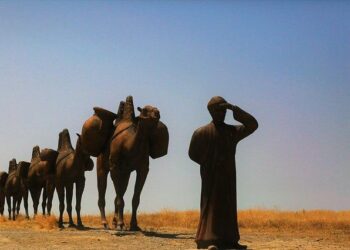
The European Union and the International Alliance for the Protection of Heritage in Conflict Areas (ALIPH) have jointly launched nearly 30 new projects aimed at safeguarding cultural heritage across Central Asia. Announced by the European External Action Service (EEAS), this initiative underscores a growing commitment to preserving the region’s rich historical legacy amid ongoing challenges. The collaborative efforts focus on protecting invaluable sites and artifacts, promoting cultural resilience, and supporting local communities in maintaining their heritage for future generations.
New Initiatives Target Preservation of Central Asia’s Cultural Treasures
In an unprecedented collaboration, the European Union and the International Alliance for the Protection of Heritage in Conflict Areas (ALIPH) have inaugurated nearly 30 projects aimed at safeguarding Central Asia’s invaluable cultural legacies. These initiatives span multiple countries across the region, focusing on the restoration of historic sites, documentation of intangible traditions, and enhancement of local capacities to protect heritage from natural and human-made threats. The projects prioritize community engagement, integrating modern technology with traditional knowledge to create sustainable preservation frameworks.
The array of projects includes:
- Revitalization of ancient Silk Road monuments through advanced conservation techniques.
- Digital archiving of endangered manuscripts and oral histories.
- Training programs for local artisans and heritage professionals.
- Strengthening cross-border cooperation for cultural heritage monitoring.
| Project Focus | Country | Duration | Key Outcome |
|---|---|---|---|
| Silk Road Monuments | Kazakhstan | 18 months | Structural stabilization & visitor access |
| Manuscript Digitization | Uzbekistan | 12 months | Online public archive launch |
| Artisan Skills Development | Kyrgyzstan | 24 months | Certification for sustainable craft production |
| Heritage Monitoring Network | Tajikistan & Turkmenistan | 20 months | Regional early-warning system |
Collaborative Efforts Enhance Regional Capacity for Heritage Protection
Central Asia is witnessing a significant boost in its ability to safeguard cultural treasures through a coordinated approach led by the European Union and the International Alliance for the Protection of Heritage in Conflict Areas (ALIPH). This multi-faceted initiative brings together local authorities, heritage experts, and international partners, fostering knowledge exchange and technical skill development. Among the core elements driving this collaboration are:
- Joint training programs for restoration specialists and archaeologists, enhancing on-the-ground capabilities.
- Shared digital platforms for documentation and monitoring of vulnerable sites.
- Community engagement efforts to raise public awareness and ensure sustainable preservation practices.
Such a synergistic framework facilitates a comprehensive response to both natural and human-induced threats to heritage. The success of this cooperative model is further highlighted by the allocation of nearly 30 targeted projects that address diverse challenges across the region, mapping out priorities and mobilizing resources effectively. The table below illustrates the distribution of these projects by country and focus area, reflecting the strategic regional outreach.
| Country | Number of Projects | Key Focus Areas |
|---|---|---|
| Kazakhstan | 8 | Archaeological sites, digital archives |
| Kyrgyzstan | 6 | Monument restoration, local capacity building |
| Tajikistan | 5 | Traditional crafts, heritage education |
| Uzbekistan | 7 | Urban conservation, community involvement |
| Turkmenistan | 3 | Historical site preservation, emergency preparedness |
Strategic Recommendations for Sustainable Management and Community Engagement
To ensure the long-term success of these new heritage protection initiatives, it is imperative to foster inclusive collaboration between local governments, community leaders, and international experts. Capacity-building programs tailored for local stakeholders will enable sustainable stewardship of cultural sites, aligning preservation efforts with community needs and socio-economic development. Additionally, adopting cutting-edge technology such as 3D mapping and digital archiving can enhance monitoring and documentation processes, reducing risks posed by natural disasters and illicit trafficking.
Effective engagement hinges on empowering local populations through education and participatory decision-making frameworks. Encouraging community-led cultural festivals, workshops, and conservation training sessions can nurture a shared sense of ownership and pride in the region’s rich history. The following table summarizes core strategies recommended for integrating sustainability and community involvement into the projects:
| Strategy | Key Focus | Expected Outcome |
|---|---|---|
| Capacity Building | Training local stakeholders | Enhanced site management skills |
| Technology Integration | Digital tools for documentation | Improved preservation accuracy |
| Community Involvement | Participatory programs | Strengthened cultural identity |
| Educational Outreach | Workshops and festivals | Heightened public awareness |
- Inclusivity: Ensures diverse stakeholder voices guide conservation actions.
- Sustainability: Balances heritage preservation with local economic growth.
- Adaptability: Allows projects to evolve with environmental and social changes.
In Summary
As these nearly 30 new projects get underway, the collaboration between the European Union and ALIPH marks a significant commitment to safeguarding Central Asia’s rich cultural heritage. By investing in preservation and restoration efforts, the initiatives aim not only to protect invaluable historical sites but also to foster regional cooperation and sustainable development. Moving forward, the success of these projects will be closely watched as a model for international partnership in cultural conservation.