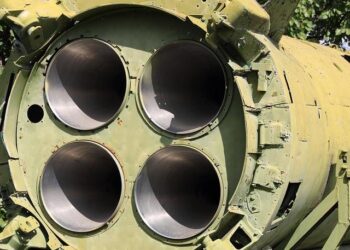

North Korea has announced that its recent missile tests included weapons equipped with cluster-bomb warheads, marking a significant development in the regime’s advancing military capabilities. According to state media reports, these tests demonstrate Pyongyang’s continued commitment to enhancing its strategic arsenal amid ongoing regional tensions. The moves have drawn sharp international concern, with experts warning of the potential for increased destabilization on the Korean Peninsula.
North Korea Confirms Use of Cluster Bomb Warheads in Recent Missile Tests
North Korea has officially acknowledged that its latest missile tests included warheads equipped with cluster munitions. This marks a significant escalation in the type of weaponry being demonstrated by the regime, raising international concerns about potential violations of global arms control agreements. The state media emphasized the enhanced destructive capacity of the tested missiles, touting their strategic advantage in deterring hostile forces. Analysts warn that the deployment of cluster bomb warheads could have serious humanitarian consequences, due to their notoriously wide-area effect and the persistent risk posed by unexploded submunitions.
Key details surrounding the tests include:
- Multiple missiles launched from diverse coastal sites
- Use of cluster warheads designed to target both personnel and equipment
- Official statements framing the tests as defensive measures
| Missile Type | Warhead | Range | Date of Test |
|---|---|---|---|
| Hwasong-12 | Cluster Bomb | 1,200 km | April 27, 2024 |
| KN-23 | Cluster Bomb | 420 km | April 27, 2024 |
Implications for Regional Security and International Arms Control Efforts
The unveiling of missiles equipped with cluster-bomb warheads marks a significant escalation in Pyongyang’s military capabilities, igniting fresh concerns among neighboring countries and global security analysts. These developments challenge existing regional balances, particularly in East Asia, where tensions are already heightened by North Korea’s historic missile tests and nuclear aspirations. The increased lethality and indiscriminate nature of cluster munitions amplify fears of broader conflict and civilian casualties, which could destabilize security frameworks and provoke intensified military responses from affected states.
International arms control efforts face a critical test as this revelation underscores loopholes and enforcement challenges within current non-proliferation regimes. While various treaties, such as the Convention on Cluster Munitions, directly prohibit the use of such weapons, North Korea remains outside these agreements, complicating diplomatic leverage and compliance monitoring. Response strategies must now balance pressure and engagement, focusing on:
- Strengthening multilateral sanctions targeting ballistic missile components and technologies.
- Enhancing regional intelligence-sharing to preempt further provocative weapons testing.
- Reinvigorating dialogue channels to integrate North Korea into global non-proliferation frameworks.
| Actor | Security Concern | Potential Response | |
|---|---|---|---|
| South Korea | Civilian safety, military deterrence | Augment missile defense systems | |
| Japan | Territorial security, humanitarian concerns | Promote diplomatic initiatives, shore up defense alliances | |
| Actor |
Security Concern |
Potential Response |
|
| South Korea | Civilian safety, military deterrence | Augment missile defense systems | |
| Japan | Territorial security, humanitarian concerns | Promote diplomatic initiatives, shore up defense alliances | |
| United States | Regional stability, non-proliferation enforcement | Implement stricter sanctions and maintain military presence | |
| China | Border security, regional influence | Encourage diplomatic engagement, balance regional power |
### Suggested closing paragraph (optional):
Ultimately, addressing the emerging threat posed by North Korea’s deployment of cluster-bomb warheads requires a coordinated approach that balances deterrence with diplomacy. Regional actors, supported by the international community, must navigate complex geopolitical realities to prevent escalation while seeking long-term solutions that uphold security and humanitarian norms.
—
If you’d like me to format or expand this further, please let me know!
Calls for Enhanced Monitoring and Diplomatic Engagement to Address Escalating Threats
International security experts and policymakers are urging for heightened surveillance measures and a renewed diplomatic push in light of North Korea’s recent admission regarding its deployment of missiles armed with cluster-bomb warheads. This revelation has intensified concerns about the potential humanitarian impact, as cluster munitions are widely condemned for their long-lasting danger to civilians. Governments and global organizations are calling for the activation of more rigorous monitoring systems to track missile tests and analyze the evolving threat landscape.
Several key strategies are being advocated to mitigate the risks and de-escalate tensions through dialogue:
- Strengthening regional intelligence-sharing frameworks among East Asian nations and allies.
- Engaging multilateral forums to promote transparency and accountability regarding missile capabilities.
- Reinforcing sanctions and diplomatic channels that prioritize conflict resolution and nuclear non-proliferation.
| Recommended Actions | Expected Outcome |
|---|---|
| Enhanced Satellite Surveillance | Early detection of missile launches |
| Diplomatic Engagement | Reduced hostilities and potential disarmament talks |
| International Sanctions | Pressure on North Korea to halt dangerous tests |
The Conclusion
As North Korea continues to advance its missile capabilities, including the reported use of cluster-bomb warheads, regional and international tensions remain high. The developments underscore ongoing challenges to diplomatic efforts aimed at denuclearization and stability on the Korean Peninsula. Observers and policymakers will be closely monitoring Pyongyang’s next moves as the global community seeks to address the evolving security threat.
Denial of responsibility! asia-news.biz is an automatic aggregator around the global media. All the content are available free on Internet. We have just arranged it in one platform for educational purpose only. In each content, the hyperlink to the primary source is specified. All trademarks belong to their rightful owners, all materials to their authors. If you are the owner of the content and do not want us to publish your materials on our website, please contact us by email – [email protected].. The content will be deleted within 24 hours.