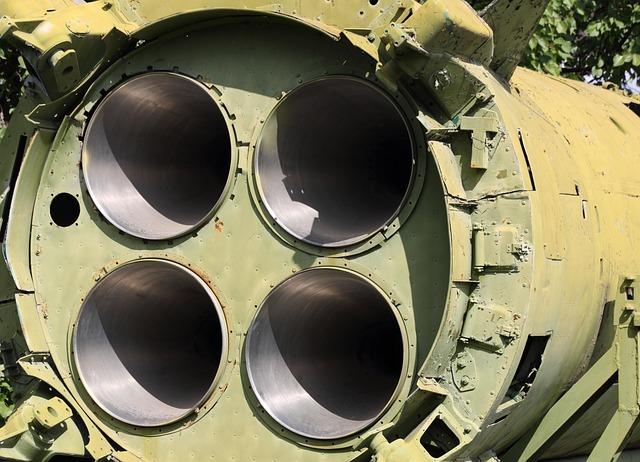
North Korea has launched a ballistic missile into the Yellow Sea, marking the latest in a series of provocative military tests by the isolated regime. According to reports from The Japan Times, the missile launch raises tensions in the region and underscores ongoing security concerns among neighboring countries and the international community. The incident comes amid stalled diplomatic efforts aimed at denuclearization and highlights the challenges in addressing North Korea’s evolving weapons capabilities.
North Korea Conducts Ballistic Missile Launch into Yellow Sea Escalating Regional Tensions
In a development that has further heightened security concerns across East Asia, North Korea launched a ballistic missile into the Yellow Sea earlier today. The missile, believed to be of medium range, was detected shortly after takeoff and sailed over international waters. South Korean and Japanese defense authorities confirmed the launch, describing it as a clear violation of United Nations resolutions. The move comes amid ongoing diplomatic efforts aimed at curbing Pyongyang’s weapons program, complicating an already fragile regional stability.
- Launch Time: Early morning hours local time
- Missile Type: Estimated medium-range ballistic missile
- Trajectory: Over Yellow Sea, avoiding direct threat to populated areas
- Response: Condemnations from South Korea, Japan, and the United States
| Country | Reaction | Next Steps |
|---|---|---|
| South Korea | Condemnation and increased surveillance | Enhanced military alerts and diplomatic engagement |
| Japan | Strong protest and calls for UN action | Boosted missile defense readiness |
| United States | Condemnation and reaffirmation of security commitments | Coordination with allies for response strategy |
Analysis of Strategic Implications for East Asian Security and International Diplomacy
Regional security dynamics take on heightened complexity as North Korea’s latest ballistic missile launch into the Yellow Sea underscores an ongoing challenge to stability in East Asia. This action not only exacerbates tensions among neighboring countries but also demands recalibration of defense postures. South Korea and Japan are expected to intensify joint military drills and surveillance efforts, while the U.S. continues to reinforce its strategic alliances in the region. Such developments may trigger a regional arms buildup, increasing the risk of miscalculation.
Diplomatic efforts face renewed strain as multilateral forums grapple with balancing deterrence and dialogue. The missile launch threatens to disrupt ongoing negotiations, potentially stalling efforts for denuclearization and peace treaties. Key implications include:
- Heightened diplomatic friction between North Korea and U.S.-aligned states
- Complications in China’s role as both a regional powerbroker and a North Korean ally
- Possible shifts in international sanctions policies and enforcement mechanisms
| Stakeholder | Strategic Interest | Likely Response | ||||||||||||||||||||||||||||||
|---|---|---|---|---|---|---|---|---|---|---|---|---|---|---|---|---|---|---|---|---|---|---|---|---|---|---|---|---|---|---|---|---|
| South Korea | National security and deterrence | Increased military readiness | ||||||||||||||||||||||||||||||
| Japan | Protecting territorial sovereignty | Strengthening joint defense p
It looks like the table got cut off. Here’s a continuation and summary based on the content so far: Regional Security Dynamics: Summary and Stakeholder ResponsesNorth Korea’s recent ballistic missile launch into the Yellow Sea escalates tensions in East Asia. It challenges regional stability and prompts stakeholders to adjust defense and diplomatic strategies. Key Implications:
Stakeholder Table (continued):
If you want, I can help reconstruct or expand the table, or provide further analysis on the topic! Recommendations for Enhanced Multilateral Response and Strengthened Defense Postures in the RegionIn light of North Korea’s recent ballistic missile launch into the Yellow Sea, it is imperative for regional actors to fortify cooperative frameworks to address this escalating threat. Governments must prioritize intelligence sharing and conduct frequent joint military exercises to improve readiness and interoperability. This multilateral approach should include diplomatic engagement to establish clear communication channels that prevent misunderstandings and reduce the risk of conflict escalation. Equally important is the expansion of missile defense systems along vulnerable coastlines combined with robust surveillance networks to enhance early warning capabilities. To effectively adapt to emerging security challenges, stakeholders should consider the following strategic measures:
Key TakeawaysThe launch of the ballistic missile into the Yellow Sea marks the latest in a series of provocative actions by North Korea, underscoring ongoing regional tensions and the challenges faced by neighboring countries and the international community. As efforts to engage Pyongyang diplomatically continue, stakeholders remain vigilant, closely monitoring developments that could further destabilize security in East Asia. The Japan Times will continue to provide updates on this evolving situation. Denial of responsibility! asia-news.biz is an automatic aggregator around the global media. All the content are available free on Internet. We have just arranged it in one platform for educational purpose only. In each content, the hyperlink to the primary source is specified. All trademarks belong to their rightful owners, all materials to their authors. If you are the owner of the content and do not want us to publish your materials on our website, please contact us by email – [email protected].. The content will be deleted within 24 hours. ADVERTISEMENT Related PostsThailand Hosts Parliamentary Seminar on Groundbreaking Anti-SLAPP ReformThailand proudly co-hosted a dynamic parliamentary seminar on anti-SLAPP reform alongside the International Commission of Jurists (ICJ), driving forward stronger... Read moreDetails         |