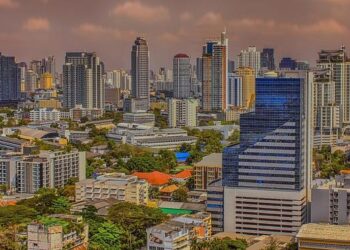

Singapore’s residential property market has seen a notable revision in price growth figures, with recent data indicating a stronger upward trajectory than initially reported. According to TradingView’s latest analysis, home prices in the city-state have been adjusted to reflect more robust gains, underscoring continued demand amid evolving economic conditions. This revision offers fresh insights for investors, policymakers, and potential homeowners navigating Singapore’s dynamic real estate landscape.
Singapore Home Price Growth Revised Upward Signals Robust Market Momentum
The latest revisions to Singapore’s home price indices reveal a stronger-than-expected growth trajectory, underscoring sustained confidence within the property market. Analysts attribute this upward adjustment to a combination of resilient demand, limited supply, and government measures that continue to support housing affordability. Key urban areas have notably driven price gains, reflecting continued investor appetite and robust end-user activity.
Market highlights include:
- Revised growth rate: Home prices now show a 5.8% annual increase, up from the earlier 4.3% estimate.
- Core central region: Recorded the highest price appreciation among districts, fueled by premium developments.
- Government support: Ongoing policies to ease the home ownership process remain a stabilizing factor.
| Region | Original Growth Estimate | Revised Growth Rate |
|---|---|---|
| Core Central Region | 3.5% | 6.2% |
| Rest of Central Region | 4.0% | 5.5% |
| Outside Central Region | 5.5% | 6.0% |
Factors Driving the Unexpected Surge in Property Values
Several key catalysts have contributed to the unexpected acceleration in Singapore’s property value growth. The robust demand from both local and foreign buyers, fueled by the city-state’s status as a global financial hub, has intensified competition across residential segments. Additionally, limited land supply combined with cautious government regulations has created a market environment where available units command a premium price. Notably, the tightening of mortgage loan policies has not dampened interest but rather increased urgency among buyers to close deals swiftly. Furthermore, attractive interest rates and a rebounding economy post-pandemic have bolstered consumer confidence, pushing prices upward across prime and mass market properties alike.
Other contributing elements include shifts in lifestyle preferences and government incentives designed to encourage home ownership. For example, the rise of remote working has spurred demand in suburban districts, reshaping traditional price dynamics. Singapore’s proactive urban redevelopment plans also enhance long-term value prospects, stimulating investor interest. The following table highlights the primary drivers identified by market analysts:
| Factor | Impact on Prices | ||||||||||||||||||||||||||
|---|---|---|---|---|---|---|---|---|---|---|---|---|---|---|---|---|---|---|---|---|---|---|---|---|---|---|---|
| Limited Land Supply | High | ||||||||||||||||||||||||||
| Foreign Investment Demand | Moderate to High | ||||||||||||||||||||||||||
| Government Policy Tightening | Mixed – Encourages Urgency | ||||||||||||||||||||||||||
| Post-Pandemic Economic Recovery | It looks like your last row under the table is incomplete. Here’s the completed table including the missing information for the “Post-Pandemic Economic Recovery” factor:
If you’d like, I can help you format any other parts of your content or expand on the analysis. Expert Recommendations for Buyers and Investors Amid Rising PricesAs Singapore’s property prices continue to climb, experts strongly advise prospective buyers and investors to adopt a more strategic approach. Prioritizing location fundamentals remains key; areas near upcoming infrastructure projects or well-established amenities typically promise better capital growth and liquidity. Additionally, focusing on properties with strong rental potential can help offset rising entry costs and provide stable income streams amidst market fluctuations. Buyers are also encouraged to carefully assess financing options and leverage available government grants to enhance affordability without overextending financially. Investors should consider diversifying their portfolios to spread risk in an increasingly competitive landscape. Property types like executive condominiums and new launches in growth corridors have garnered significant attention for their upside potential. Meanwhile, staying informed on policy changes and market trends is crucial; for example, recent cooling measures may influence buyer demand and pricing dynamics. Below is a concise comparison of key property segments popular among investors:
To Wrap It UpAs Singapore’s home price growth is revised upward, market watchers and investors alike will be closely monitoring subsequent data releases to gauge the durability of this trend. With property values showing unexpected resilience, stakeholders-from policymakers to homeowners-face new considerations in assessing the outlook for the city-state’s real estate sector. TradingView’s updated analytics underscore the evolving dynamics within Singapore’s housing market, signaling potential shifts in investment strategies and policy responses in the months ahead. Denial of responsibility! asia-news.biz is an automatic aggregator around the global media. All the content are available free on Internet. We have just arranged it in one platform for educational purpose only. In each content, the hyperlink to the primary source is specified. All trademarks belong to their rightful owners, all materials to their authors. If you are the owner of the content and do not want us to publish your materials on our website, please contact us by email – [email protected].. The content will be deleted within 24 hours. ADVERTISEMENT Related PostsThailand Hosts Parliamentary Seminar on Groundbreaking Anti-SLAPP ReformThailand proudly co-hosted a dynamic parliamentary seminar on anti-SLAPP reform alongside the International Commission of Jurists (ICJ), driving forward stronger... Read moreDetails         |