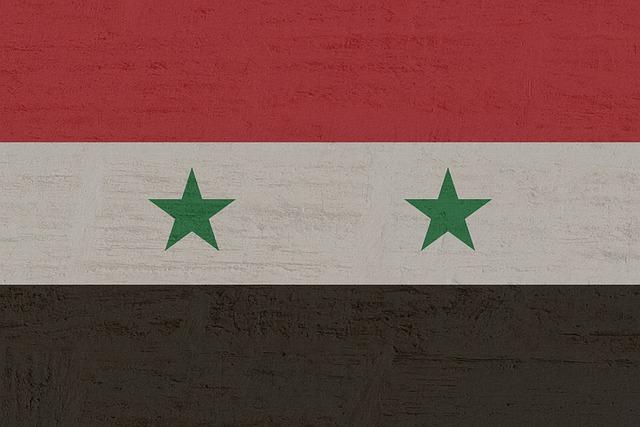
As Syria grapples with the aftermath of a prolonged civil war, questions are emerging about the country’s religious future. Recent reports highlight a growing push towards Salafi Islam, spurred in part by influential clerics who once endorsed the extremist ideology of the Islamic State. Central to this movement is the figure known as the “ISIS Mufti,” whose campaign to promote Sharia law raises concerns about a potential return to hardline religious governance. This article examines the dynamics behind Syria’s shifting religious landscape and the implications of the “ISIS Mufti’s” efforts, drawing on research from the Alma Research and Education Center.
The Resurgence of Salafi Islam in Syria and Its Impact on Local Communities
The recent revival of Salafi Islam in Syria marks a significant shift in the religious landscape, particularly within communities long affected by conflict and ideological fragmentation. Spearheaded by influential clerics aligned with the so-called “ISIS Mufti,” a renewed drive toward implementing strict Sharia law is underway, reshaping social norms and governance structures in several liberated areas. This resurgence is not merely theological but deeply socio-political, with religious rhetoric being mobilized to consolidate control and legitimize new power hierarchies rooted in Salafi interpretations of Islamic authority.
Local populations face a complex array of consequences due to this transformation, with impacts ranging from daily living practices to broader communal relations. Key effects include:
- Reinforced Gender Roles: The strict application of Salafi doctrine has intensified gender segregation and limited women’s public roles.
- Legal Restructuring: Courts now frequently refer to Sharia principles, affecting everything from civil disputes to criminal cases.
- Education and Media Control: Curricula and local media outlets are increasingly purged of dissenting views, replaced by Salafi-approved content.
Below is a summary of key local community changes related to the Salafi re-emergence:
| Area | Dominant Sharia Practice | Community Impact | |||||||||||||||||||||||||||||||||||||||
|---|---|---|---|---|---|---|---|---|---|---|---|---|---|---|---|---|---|---|---|---|---|---|---|---|---|---|---|---|---|---|---|---|---|---|---|---|---|---|---|---|---|
| Raqqa | Strict Hudud implementation | Heightened public fear and reduced dissent | |||||||||||||||||||||||||||||||||||||||
| Deir ez-Zor | Educational curriculum overhaul | Youth indoctrination with Salafi ideology |
| Area | Dominant Sharia Practice | Community Impact |
|---|---|---|
| Raqqa | Strict Hudud implementation | Heightened public fear and reduced dissent |
| Deir ez-Zor | Educational curriculum overhaul | Youth indoctrination with Salafi ideology |
| Idlib | Media censorship and religious broadcasting | Erosion of pluralistic discourse |
| Aleppo outskirts | Gender segregation enforcement | Restricted women’s mobility and participation |
—
### Summary
The resurgence of Salafi Islam in Syria, particularly in the context of the instability post-conflict, has led to the institutionalization of strict Sharia law in several regions with diverse impacts on local populations. From judicial reforms and educational curriculums to media control and social regulations like gender segregation, these developments signify a broader socio-political power shift. Communities have experienced a narrowing of social freedoms, increased fear of dissent, and systematic
Inside the Sharia Campaign Led by the ISIS Mufti and Its Ideological Reach
The Sharia campaign spearheaded by the ISIS Mufti has escalated its influence across various regions, embedding a strict interpretation of Salafi ideology among local populations. This ideological push is characterized by an uncompromising enforcement of Islamic law, often through coercive measures and the establishment of parallel judicial structures. The campaign seeks to redefine societal norms, governance, and legal frameworks, creating a parallel power system that challenges state authority. Its messaging employs religious rhetoric to legitimize violence, marginalize dissenters, and attract recruits from disenfranchised segments of the population.
This movement’s ideological reach extends beyond mere legalism, encompassing social practices, education curriculums, and communal life. It promotes a strict Salafi vision that demands conformity and actively suppresses alternative Islamic interpretations. The campaign’s mechanisms include:
- Targeted indoctrination programs in mosques and prisons
- Propagation of fatwas to justify governance and warfare tactics
- Control over charitable organizations to funnel resources
- Social media dissemination to expand ideological influence globally
| Region | Level of Influence | Key Methods |
|---|---|---|
| Northern Syria | High | Military enforcement, Sharia courts |
| Western Iraq | Moderate | Religious lectures, Recruitment |
| Global Diaspora | Emerging | Online propaganda, Fundraising |
Strategic Recommendations for Countering Extremist Religious Narratives in Syria
Enhancing community resilience through localized initiatives remains crucial to undermining extremist religious narratives. This involves empowering moderate religious leaders and scholars to promote inclusive interpretations of Islam that counteract Salafi ideological dominance. Additionally, investing in educational programs that foster critical thinking and religious literacy among youth is essential to reduce vulnerability to radicalization. Strategic partnerships with civil society organizations can facilitate grassroots outreach, creating safe spaces for dialogue that emphasize shared values and national unity.
State and international actors must also prioritize intelligence-sharing and media countermeasures to disrupt the spread of Salafi jihadist propaganda. Digital campaigns designed to highlight the socio-political costs of extremist agendas can effectively challenge recruitment efforts online. The table below outlines key stakeholder roles and recommended actions for a concerted response:
| Stakeholder | Recommended Actions |
|---|---|
| Government Agencies | Enforce laws against hate speech; support moderate institutions |
| Religious Leaders | Advocate tolerant narratives; engage communities actively |
| Media Outlets | Promote fact-based reporting and counter-messaging |
| Educational Institutions | Integrate religious literacy and conflict resolution curricula |
| NGOs | Conduct grassroots programs focusing on social cohesion |
Final Thoughts
As Syria navigates a fragile post-conflict landscape, the resurgence of Salafi Islam, propelled by figures such as the so-called “ISIS Mufti,” poses complex challenges for the country’s social and political fabric. The ongoing efforts to impose Sharia law highlight the enduring influence of extremist ideologies amid Syria’s fractured state. Understanding these dynamics is crucial for policymakers and analysts seeking to promote stability and counter radicalization in the region. The evolving situation remains a critical area for continued observation and research.
Denial of responsibility! asia-news.biz is an automatic aggregator around the global media. All the content are available free on Internet. We have just arranged it in one platform for educational purpose only. In each content, the hyperlink to the primary source is specified. All trademarks belong to their rightful owners, all materials to their authors. If you are the owner of the content and do not want us to publish your materials on our website, please contact us by email – [email protected].. The content will be deleted within 24 hours.
Related Posts





Thailand Hosts Parliamentary Seminar on Groundbreaking Anti-SLAPP Reform
Thailand proudly co-hosted a dynamic parliamentary seminar on anti-SLAPP reform alongside the International Commission of Jurists (ICJ), driving forward stronger...
Read moreDetails