
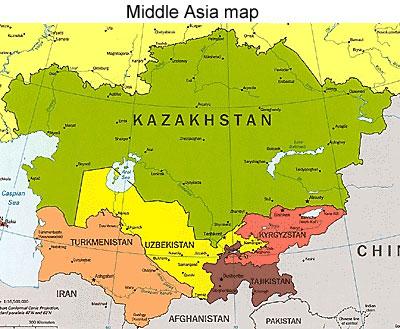
Central Asia’s rail corridors have emerged as critical arteries in the region’s economic and geopolitical landscape, drawing heightened attention from global powers. In a strategic contest for influence, both the United States and China have stepped up their investments and partnerships, each seeking to shape the future of connectivity across Kazakhstan, Uzbekistan, Kyrgyzstan, Turkmenistan, and Tajikistan. This article examines the evolving dynamics of these international collaborations, shedding light on how U.S. initiatives and China’s Belt and Road projects are reshaping Central Asia’s transportation infrastructure and regional integration.
U S and Chinese Investments Shape the Future of Central Asia’s Rail Infrastructure
The expansion of rail infrastructure in Central Asia has become a strategic arena where U.S. and Chinese investments play pivotal roles in shaping regional connectivity and economic influence. Beijing’s ambitious Belt and Road Initiative (BRI) continues to channel substantial funding into cross-border rail projects that link China with key Central Asian nations, facilitating greater trade flow and resource access. Meanwhile, Washington is bolstering its footprint through targeted investments and partnerships that emphasize modernization, sustainability, and security cooperation, seeking to offer an alternative vision that balances China’s growing presence.
These competing yet sometimes complementary approaches underscore a complex geopolitical dynamic. Key focus areas include:
- High-speed rail corridors financed predominantly by Chinese state-owned enterprises, accelerating regional integration.
- Technological upgrades and infrastructure resilience projects supported by U.S. agencies and private investors.
- Cross-border logistics hubs enhancing efficiency while reinforcing supply chain diversity to reduce overdependence on any single partner.
| Investor | Key Focus | Central Asian Beneficiaries |
|---|---|---|
| China | Infrastructure Expansion, High-Speed Rail | Kazakhstan, Uzbekistan, Kyrgyzstan |
| United States | Modernization, Security, Sustainability | Kazakhstan, Turkmenistan, Uzbekistan |
Strategic Implications of Competing Rail Corridors for Regional Connectivity
The development of competing rail corridors in Central Asia introduces a complex matrix of strategic calculations for regional connectivity. On one hand, China’s Belt and Road Initiative (BRI) prioritizes extensive infrastructure investment, aiming to anchor Central Asia as a pivotal node along its vast Eurasian transit routes. This presents not only an economic opportunity for the region but also a lever for Beijing to augment its geopolitical influence. Conversely, U.S.-backed projects emphasize connectivity through diversification, promoting corridors that link Central Asia to Europe and South Asia, thereby reducing dependency on any single power bloc and fostering multi-vector partnerships.
These divergent strategies create a dynamic landscape where Central Asian states must navigate competing interests to maximize their own development goals. Key considerations include:
- Economic diversification: Avoiding overreliance on Chinese or U.S.-favored routes enhances resilience.
- Infrastructure interoperability: Ensuring seamless transit across corridors to boost trade efficiency.
- Political balancing: Leveraging partnerships to maintain sovereign agency amidst great power engagement.
- Security dynamics: Addressing transnational threats inherent along critical transport routes.
These factors underline the intricate interplay between infrastructure and diplomacy, where rail corridors serve not merely as transit paths but as instruments of influence shaping Central Asia’s geopolitical landscape.
| Aspect | Chinese-Led Corridor | U.S.-Backed Corridor |
|---|---|---|
| Primary Goal | Integration with BRI and Eurasian trade | Regional diversification and security |
| Key Partner Countries | Kazakhstan, Uzbekistan, Kyrgyzstan | Kazakhstan, Tajikistan, Afghanistan |
| Strategic Benefit | Expanded access to Chinese markets | Balanced influence, reducing dominance |
| Challenges | Debt sustainability, political influence | Funding limitations, security risks |
The development of competing rail corridors in Central Asia, led respectively by China under the Belt and Road Initiative (BRI) and by U.S.-supported projects, creates a multifaceted strategic environment for the region’s connectivity and geopolitics. This duality influences Central Asian states’ decisions on infrastructure and diplomacy, with several key implications:
Key Insights:
- Economic Opportunities and Risks
- The Chinese-led corridor integrates Central Asia into the expansive Eurasian trade network via the BRI, offering access to Chinese markets and substantial infrastructure investments. However, this comes with concerns over debt sustainability and the risk of increasing Chinese political influence.
- The U.S.-backed corridor emphasizes connectivity diversification, focusing on linking Central Asia to both Europe and South Asia, particularly through countries like Kazakhstan, Tajikistan, and Afghanistan. This approach aims to reduce dependency on any single power, but faces funding challenges and heightened security risks, especially in conflict-prone areas.
- Strategic Balancing by Central Asian States
- Nations like Kazakhstan and Uzbekistan are engaged by both corridors, placing them in a position to leverage competing interests to maximize national development. They must carefully balance the benefits of investment and market access against concerns over sovereignty and influence.
- Political balancing is crucial to maintain agency amid competing great power agendas. Diversifying infrastructure partnerships can help preserve autonomy and foster greater resilience.
- Interoperability and Connectivity Efficiency
- Ensuring infrastructure interoperability between these corridors can enhance seamless transit, promoting efficient trade flows across the region despite different geopolitical sponsorships.
- Coordinated transit policies and technical standards may help mitigate fragmentation caused by competing routes.
- Security and Regional Stability
- Both corridors traverse areas with various transnational threats, including terrorism, trafficking, and border disputes. Addressing these security dynamics is essential to safeguarding infrastructure investments and ensuring reliable trade routes.
Summary Table Recap
| Aspect | Chinese-Led Corridor | U.S.-Backed Corridor |
|---|---|---|
| Primary Goal | Integration with BRI and Eurasian trade | Regional diversification and security |
| Key Partner Countries | Kazakhstan, Uzbekistan, Kyrgyzstan | Kazakhstan, Tajikistan, Afghanistan |
| Strategic Benefit | Expanded access to Chinese markets | Balanced influence, reducing dominance |
| Challenges | Debt sustainability, political influence | Funding limitations, security risks |
Overall Assessment
Central Asia stands at a crossroads where rail corridor development shapes not only economic prospects but also geopolitical alignments. The dual competing corridors provide opportunities for diversification and enhanced connectivity, but also pose complex challenges around sovereignty, debt, security, and inter-state collaboration. Successful navigation of this landscape will depend on the ability of Central Asian states to engage strategically
Aligning Partnerships with Central Asia’s Economic Priorities and Sustainable Development Goals
As Central Asia positions itself as a critical nexus connecting East and West, strategic partnerships with global powers like the U.S. and China are increasingly tailored to align with the region’s economic ambitions and sustainability commitments. Both countries’ investments in rail infrastructure reflect a nuanced understanding of Central Asia’s priorities: facilitating trade diversification, enhancing regional integration, and supporting the transition towards greener, more resilient economies.
Key focal points include:
- Economic diversification: Rail corridors enable access to new markets beyond traditional energy exports.
- Infrastructure modernization: Upgrading rail networks to meet international standards and improve efficiency.
- Environmental sustainability: Promoting cleaner transport options inline with Sustainable Development Goals (SDGs).
- Inclusive growth: Creating employment opportunities and boosting local economies along the corridors.
| Priority Area | U.S. Partnership Focus | Chinese Partnership Focus |
|---|---|---|
| Trade Connectivity | Improving customs protocols & digital integration | Expanding cross-border rail links under BRI |
| Green Initiatives | Supporting eco-friendly rail equipment | Investing in electrified rail segments |
| Economic Empowerment | Skills training and job creation programs | Funding regional SME logistics hubs |
In Retrospect
As Central Asia continues to solidify its position as a pivotal transit hub between East and West, the evolving dynamics of U.S. and Chinese involvement in the region’s rail infrastructure underscore broader geopolitical and economic shifts. While China’s expansive Belt and Road Initiative drives significant investment and connectivity, American partnerships emphasize strategic diversification and regional stability. Moving forward, the interplay of these international actors will shape not only the future of Central Asia’s rail corridors but also the wider balance of influence across Eurasia. The world will be watching closely as these partnerships develop amid competing interests and emerging opportunities.