
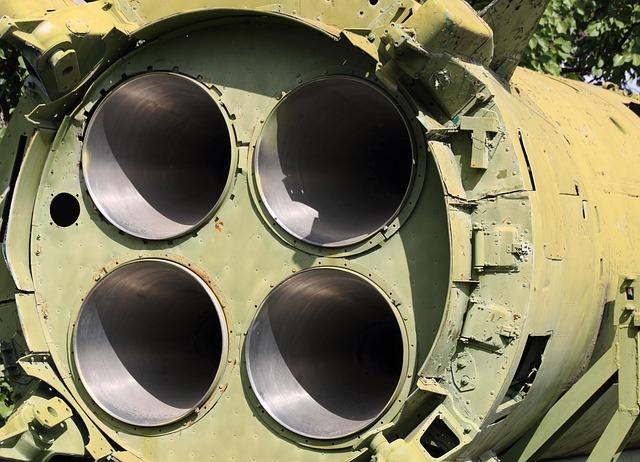
The United States has successfully intercepted multiple Iranian ballistic missiles and drones launched toward Kuwait and Bahrain, escalating tensions in the volatile Gulf region. According to military officials, the defensive actions highlight growing security concerns amid ongoing geopolitical conflicts involving Iran and its neighbors. This latest development underscores the fragile stability in the Middle East as international forces remain vigilant against threats to allied nations.
US Military Successfully Intercepts Iranian Ballistic Missiles and Drones Targeting Gulf Allies
In a decisive response to escalating regional tensions, US military forces successfully intercepted multiple Iranian ballistic missiles and unmanned aerial vehicles (UAVs) launched toward strategic Gulf allies, including Kuwait and Bahrain. The operation, conducted using advanced missile defense systems, prevented what could have been a significant escalation in the volatile Persian Gulf region. Defense officials confirmed that the intercepts took place amid heightened alerts, demonstrating both the readiness and the capability of US forces to protect critical partners in the area.
Detailed assessments revealed that the intercepted threats included:
- Ballistic missiles launched from Iranian territory targeting key military installations
- Drones aimed at disrupting airspace security and intelligence operations
- Coordinated attacks designed to overwhelm regional defenses
The US Department of Defense emphasized its commitment to maintaining stability across the Gulf by enhancing cooperative defense measures, intelligence sharing, and deploying cutting-edge technology to anticipate and neutralize future threats.
| Intercepted Threat | Launch Point | Targeted Area | Status |
|---|---|---|---|
| Ballistic Missile | Southern Iran | Kuwait Air Base | Neutralized |
| Drone | Western Iran | Bahrain Naval Port | Neutralized |
| Ballistic Missile | Eastern Iran | Kuwait City Outskirts | Neutralized |
Strategic Implications for Regional Security Amid Rising Iran-US Tensions
The recent interception of Iranian ballistic missiles and drones targeting Kuwait and Bahrain marks a significant escalation with far-reaching consequences for regional stability. This development underscores Tehran’s growing willingness to assert its influence via military provocations, challenging the security architecture upheld by the US and its Gulf allies. Analysts warn that such actions not only exacerbate existing tensions but also risk triggering a broader conflict that could destabilize vital maritime corridors and energy markets crucial to the global economy.
In the face of this heightened threat environment, regional actors are recalibrating their strategic postures, with increased emphasis on missile defense systems and intelligence sharing. Key implications include:
- Enhanced US military presence: Intensification of deployments in the Gulf to deter further Iranian aggression.
- Strengthened Gulf Cooperation Council unity: Joint security initiatives aimed at rapid response capabilities.
- Diplomatic efforts under strain: Reduced prospects for de-escalation amid persistent retaliatory actions.
- Potential arms race: Regional states may pursue advanced offensive and defensive technologies to safeguard interests.
| Actor | Strategic Response | Impact | |||||||||||
|---|---|---|---|---|---|---|---|---|---|---|---|---|---|
| United States | Augmented military assets, missile defense upgrades | Deterrence of Iranian strikes, reassurance to allies | |||||||||||
| Kuwait & Bahrain | Recommendations for Strengthening Defense Collaboration Between Kuwait Bahrain and US
To enhance the collective defense capabilities of Kuwait, Bahrain, and the United States, it is imperative to invest in advanced intelligence sharing platforms that facilitate real-time data exchange. Establishing a unified communication network capable of intercepting and tracking missile and drone threats will significantly improve response times and operational coordination. Moreover, joint training exercises focusing on missile defense and counter-drone tactics should be conducted regularly to strengthen interoperability and build trust among allied forces. In addition, adopting a structured framework for technology transfer and co-development of defense systems can accelerate innovation and localize critical capabilities within the region. The following table outlines priority areas for collaboration and suggested initiatives:
To Wrap It UpThe interception of Iranian ballistic missiles and drones targeting Kuwait and Bahrain underscores the ongoing volatility in the Gulf region and highlights the persistent threat posed by Tehran’s military activities. As tensions continue to simmer, the incident serves as a stark reminder of the fragile security environment and the critical role of US defense capabilities in safeguarding allied nations. Both regional actors and the international community will be closely monitoring developments to assess potential repercussions for stability in the Middle East. Denial of responsibility! asia-news.biz is an automatic aggregator around the global media. All the content are available free on Internet. We have just arranged it in one platform for educational purpose only. In each content, the hyperlink to the primary source is specified. All trademarks belong to their rightful owners, all materials to their authors. If you are the owner of the content and do not want us to publish your materials on our website, please contact us by email – [email protected].. The content will be deleted within 24 hours. ADVERTISEMENT Related PostsLast Chance in Thailand: Four World Championship Spots Up for GrabsThailand proudly hosts the thrilling final qualifier for the International Wheelchair Basketball Federation, where four highly sought-after World Championship spots... Read moreDetails         |