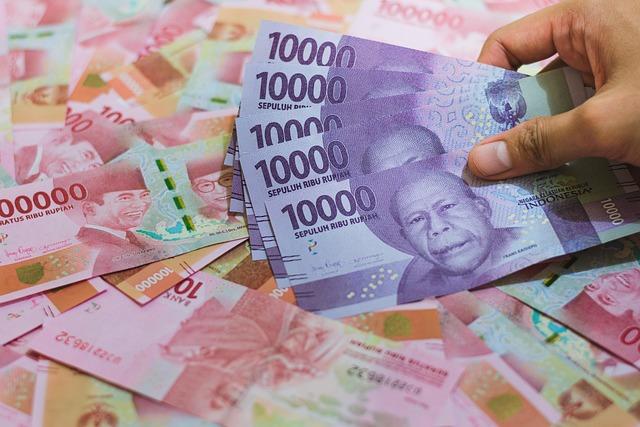
The Indonesian rupiah plummeted to a record low this week, intensifying market concerns over the nation’s economic stability. In response, analysts widely anticipate that Bank Indonesia will raise its benchmark interest rate to 5% in an effort to stabilize the currency and curb mounting inflationary pressures. This potential move underscores the central bank’s commitment to maintaining monetary discipline amid global financial uncertainties and domestic challenges.
Rupiah Declines to Historic Low Amid Global Economic Pressures
The Indonesian Rupiah has plunged to an unprecedented low against the US Dollar, reflecting mounting concerns over persistent global economic headwinds. Factors such as rising inflation in major economies, geopolitical tensions, and fluctuating commodity prices have collectively exerted pressure on emerging market currencies. Market analysts suggest that the Rupiah’s slide is not merely a reflection of domestic challenges but a response to broader international uncertainties that have shaken investor confidence worldwide.
In response to the sharp depreciation, Bank Indonesia is widely expected to announce a policy rate hike, potentially raising the benchmark interest rate to 5% in an effort to stabilize the currency and curb inflationary pressures. Key measures under consideration include:
- Monetary tightening through increased interest rates
- Enhanced foreign exchange interventions
- Strengthening macroprudential regulations
| Indicator | Current Level | Historical Average |
|---|---|---|
| USD/IDR Exchange Rate | 16,100 | 14,500 |
| Inflation Rate (YoY) | 6.2% | 3.5% |
| BI 7-Day Reverse Repo Rate | 4.25% | 3.5% |
Bank Indonesia Expected to Raise Interest Rates to Contain Inflation
Amid the Rupiah’s unprecedented plunge to fresh lows against the US Dollar, market analysts anticipate that Bank Indonesia will take decisive action by hiking the benchmark interest rate to 5%. This potential move is aimed at curbing surging inflation, which has been exacerbated by rising global commodity prices and supply chain disruptions. Investors are watching closely as the central bank seeks to stabilize the currency without stunting Indonesia’s economic recovery.
Key factors influencing this decision include:
- Inflation pressure: Consumer prices have accelerated, reducing purchasing power nationwide.
- Currency depreciation: The Rupiah’s rapid decline threatens import costs and external debt servicing.
- Global economic uncertainty: Geopolitical tensions and tighter US monetary policy have increased capital outflows.
| Indicator | Current Value | Forecasted Trend |
|---|---|---|
| Inflation Rate | 4.7% | Rising |
| Rupiah/USD | 15,500 IDR | Depreciation |
| BI Rate | 4.25% | Increase to 5% |
Investment Strategies Amidst Rupiah Volatility and Policy Shifts
In light of the Rupiah’s recent record low and anticipated interest rate hikes from Bank Indonesia to 5%, investors are urged to reconsider their portfolios with a focus on diversification and risk management. Currency depreciation pressures foreign-denominated assets, making hedging strategies and allocation towards assets insulated from Rupiah fluctuations increasingly important. Many experts recommend increasing exposure to blue-chip stocks with strong export bases, as these companies often benefit from a weaker domestic currency by seeing improved earnings in local terms.
Further, fixed-income instruments, particularly government bonds with adjusted yields in response to policy shifts, remain attractive to conservative investors seeking stability. A balanced approach combining equities with bonds can buffer volatility while capturing growth. Below is a snapshot of suggested asset classes and their risk-return profiles amid the current economic backdrop:
| Asset Class | Risk Level | Potential Return | Currency Sensitivity |
|---|---|---|---|
| Export-Oriented Stocks | Medium-High | High | Lower |
| Government Bonds | Low-Medium | Moderate | Moderate |
| Foreign Currency Assets | Medium | Variable | High |
| Commodities | Medium-High | High | Moderate |
- Maintain liquidity: Keep a portion of the portfolio in cash or liquid assets to capitalize on market corrections.
- Use hedging tools: Explore currency derivatives or mutual funds designed to mitigate Rupiah depreciation risks.
- Monitor policy updates: Stay alert to Bank Indonesia announcements to adjust strategy promptly.
Future Outlook
As the Rupiah plunges to historic lows against major currencies, market watchers increasingly anticipate a decisive response from Bank Indonesia. With expectations mounting around a potential rate hike to 5%, the central bank faces mounting pressure to stabilize the currency and contain inflationary risks. Investors and businesses alike will be closely monitoring upcoming policy moves, which are poised to significantly influence Indonesia’s economic trajectory in the coming months.