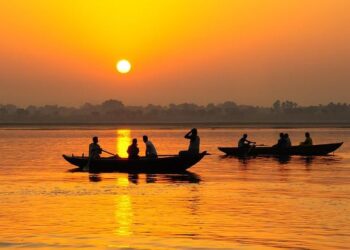
The much-anticipated monsoon season, crucial for India’s agriculture and water resources, has come to a sudden halt, raising concerns across the country. After an encouraging start, the monsoon’s vigorous advance has stalled, leaving large swathes of India parched and anxious. Meteorologists and climate experts are now analyzing the atmospheric patterns and geographical factors responsible for this unexpected slowdown. This article delves into the reasons behind the stalled monsoon, its potential impact on the economy and farming communities, and what the coming weeks may hold for India’s lifeline rainfall.
Monsoon Stagnation Over India Understanding Atmospheric and Oceanic Factors Behind the Delay
The persistent slowdown of the monsoon system over India primarily stems from a complex interplay of atmospheric and oceanic anomalies. At the atmospheric level, a pronounced upper tropospheric ridge has been suppressing the usual southwesterly winds, effectively diverting moisture-laden air away from the Indian subcontinent. This altered wind pattern stalls the normal advancement of rainfall fronts, resulting in prolonged dry spells across critical agricultural zones. Additionally, a weaker than average low-pressure trough over the northwest Bay of Bengal has failed to invigorate monsoon circulation, further contributing to the stagnation.
Oceanically, the Arabian Sea and the equatorial Indian Ocean display unexpected thermal behavior. Below is an overview of the sea surface temperature (SST) anomalies influencing the current monsoon conditions:
| Region | SST Anomaly (°C) | Impact on Monsoon |
|---|---|---|
| Arabian Sea | +0.8 | Enhanced evaporation but reduced moisture transport inland |
| Equatorial Indian Ocean | +0.5 | Disrupted convection patterns, weakening monsoon trough |
| Bay of Bengal | +0.3 | Insufficient low-pressure strengthening, stalling monsoon progress |
In summary:
- Upper atmospheric ridging deflects moisture-bearing winds.
- Oceanic warming disrupts the established convection and low-pressure systems.
- Combined factors contribute to a stagnant monsoon, delaying rainfall peaks.
Regional Impact Analysis How Prolonged Dry Spells Affect Agriculture and Water Resources
Extended dry spells across key agricultural zones have led to alarming disruptions in crop cycles and soil health. States heavily reliant on monsoon rains, such as Maharashtra, Karnataka, and Tamil Nadu, are witnessing delayed sowing and stunted growth of staple crops like rice, wheat, and pulses. This interruption not only threatens food security but also results in economic distress for millions of farmers dependent on predictable rainfall patterns. Water table depletion has accelerated, forcing an over-reliance on groundwater irrigation, which is both unsustainable and costly.
Water reservoirs and river flows have also declined sharply, impacting not only irrigation but household consumption and industrial activities. Key impacts include:
- Reduction in reservoir levels by 30-50% compared to the previous year.
- Delayed replenishment of groundwater sources prolonging water scarcity.
- Heightened competition among agricultural, urban, and industrial water users.
| Region | Reservoir Level (%) | Crop Sowing Delay (Days) | ||||||||||||||||||||||
|---|---|---|---|---|---|---|---|---|---|---|---|---|---|---|---|---|---|---|---|---|---|---|---|---|
| Maharashtra | 48 | 15 | ||||||||||||||||||||||
| Karnataka | 52 | 12 | ||||||||||||||||||||||
It looks like your table got cut off at Karnataka. Based on the content so far, here’s a summary of the regional impact of extended dry spells on agriculture and water resources, along with the partial data you provided:
Summary of Regional Impact of Extended Dry SpellsKey points:
Key impacts include:
Table (as provided so far)
If you want, I can help you recreate or complete the table or analyze the data further. Please provide the missing information or instructions! Strategies for Mitigation Enhancing Forecast Accuracy and Strengthening Water Conservation EffortsTo counter the unpredictable nature of the stalled monsoon, meteorological departments across India have been investing heavily in advanced forecasting technologies. Satellite data assimilation, Doppler radar networks, and AI-driven climate models are being integrated to improve the precision of rainfall predictions. This approach enables authorities to issue timely warnings, minimizing potential damage and allowing for better preparedness. Furthermore, collaboration between regional weather centers and international climate agencies is fostering a comprehensive understanding of large-scale atmospheric phenomena affecting the Southwest monsoon’s progress. On the ground, sustainable water management has become paramount in mitigating the impact of delayed rains. Emphasizing community-led initiatives, the government promotes:
In SummaryAs the monsoon’s progress across India remains stalled, understanding the atmospheric and geographical factors responsible is crucial for anticipating the coming weeks. With significant implications for agriculture, water resources, and overall economic activity, monitoring these disruptions will be key for policymakers and citizens alike. India Today will continue to track the monsoon’s movements closely, providing timely updates and expert insights as the season unfolds. Denial of responsibility! asia-news.biz is an automatic aggregator around the global media. All the content are available free on Internet. We have just arranged it in one platform for educational purpose only. In each content, the hyperlink to the primary source is specified. All trademarks belong to their rightful owners, all materials to their authors. If you are the owner of the content and do not want us to publish your materials on our website, please contact us by email – [email protected].. The content will be deleted within 24 hours. ADVERTISEMENT Related PostsThai Princess Passes Away at 47 After Years in Coma, Palace ConfirmsThai Princess Ubolratana Mahidol has passed away at the age of 47, following several years in a coma, the Royal... Read moreDetails         |